Closer in sign language is a multifaceted topic, encompassing various nuances in representation across different sign languages. This guide delves into the diverse ways signers express the concept of closeness, from physical proximity to emotional connection. We’ll explore the handshapes, movements, and facial expressions employed, along with contextual variations and grammatical structures. Understanding these complexities is crucial for accurate communication and appreciation of the richness of sign language.
This exploration examines the subtleties of sign language, highlighting how the concept of “closer” adapts to diverse contexts. By analyzing examples and visual aids, we aim to equip readers with a comprehensive understanding of this essential concept. Comparative tables illustrate the differences and similarities between various sign languages, showcasing the unique visual representations of “closer” in ASL, BSL, and other languages.
Further, we will explore how cultural nuances and potential misinterpretations affect communication.
Sign Language Representation of “Closer”
Sign language systems, diverse in their structures and origins, offer nuanced ways to convey concepts like “closer.” Understanding these variations is crucial for effective communication and cultural sensitivity within Deaf communities. This exploration delves into the diverse handshapes, movements, and expressions used to represent the concept of closeness across various sign languages.Sign languages, unlike spoken languages, rely on visual communication to convey meaning.
The concept of “closer” is not universally represented in the same way across different sign languages. Visual representations of “closer” are often context-dependent and influenced by cultural norms and linguistic conventions.
Nuances in Expressing “Closer”
The concept of “closer” in sign languages is conveyed through a combination of handshapes, movements, and facial expressions. Different sign languages employ distinct methods to represent degrees of closeness, utilizing various visual cues. This section highlights the variations in sign languages to express the concept of “closer.”
- Handshapes: Handshapes play a vital role in representing closeness. In some sign languages, a handshape might be held closer to the body to indicate a closer distance, while in others, a specific handshape might be used to indicate a particular type of closeness, like physical proximity versus emotional closeness. For example, in ASL, the handshape used for “closer” may vary based on whether the subject is getting closer to an object or a person.
- Movement: The movement of the hands and arms is also crucial in conveying the concept of “closer.” A gradual movement towards the body or a particular object often indicates the concept of “closer.” The speed and direction of the movement can also influence the nuance of the message. For instance, a slow, deliberate movement towards the object could suggest a more deliberate or thoughtful approach to getting closer, while a rapid movement could imply a sudden or spontaneous approach.
- Facial Expressions: Facial expressions are critical in sign languages. Expressions such as eyebrows raised, a focused stare, or a smile can add layers of meaning to the sign. These expressions can help to specify the emotional context of the concept “closer,” such as whether it’s a physical closeness or a metaphorical closeness. For example, in BSL, a slightly tilted head and a focused expression might indicate an interest in getting closer to understand something.
Comparative Analysis of Sign Languages
This section provides a comparative analysis of how different sign languages represent “closer.”
| Sign Language | Handshape | Movement | Facial Expression |
|---|---|---|---|
| American Sign Language (ASL) | Open palm, slightly cupped, or a fist | Movement towards the body or object | Eyes focused on the object or person, sometimes a slight smile or furrowed brow depending on the context |
| British Sign Language (BSL) | Open palm, or a specific handshape to indicate the nature of closeness | Movement towards the object or person, or a circular motion | Eyes focused, slight tilt of the head, or raised eyebrows |
| French Sign Language (LSF) | Open palm or a specific handshape | A combination of movements, sometimes using a specific sign for “approach” | Focused eyes, neutral or expressive, depending on the context |
Contextual Usage of “Closer” in Sign Language: Closer In Sign Language
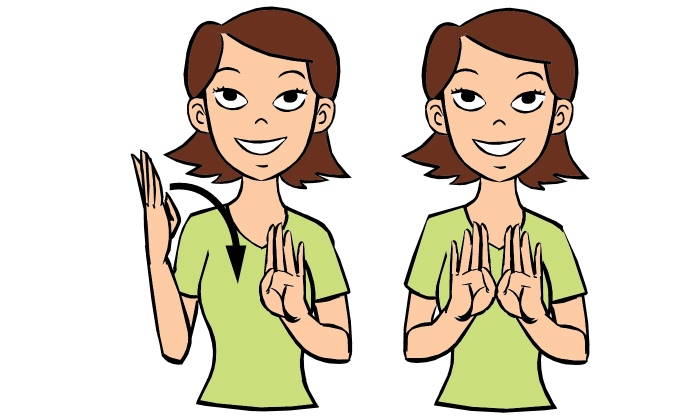
The sign for “closer” in American Sign Language (ASL), like many signs, isn’t a fixed entity. Its meaning and execution change dramatically based on the surrounding context. Understanding these contextual nuances is crucial for accurate interpretation and effective communication. The speaker’s intention, the subject of the conversation, and the overall dialogue significantly influence the sign’s precise implication.The sign for “closer” in ASL, while possessing a core meaning of proximity, is heavily reliant on the context to convey specific shades of meaning.
This includes the location of the sign in relation to the body, the movement of the hands, and the accompanying facial expressions. These subtle variations allow the signer to express degrees of closeness, types of closeness (physical, emotional, metaphorical), and the purpose of the action or description.
Contextual Variations in the Sign for “Closer”
Different contexts necessitate slight adjustments to the basic sign for “closer.” These adjustments help convey specific nuances of meaning.
- Physical Proximity: When discussing physical distance, the sign for “closer” might involve bringing a hand closer to the body, or a movement towards a specific location. The sign’s movement can be rapid or gradual, reflecting the speed at which something is moving closer. The signer might use a directional movement to show the target of the “closer” action.
- Emotional Closeness: In conversations about emotional closeness, the sign for “closer” can be accompanied by a softening of facial expressions, including a gentle smile or a focused gaze. The movement of the sign might be more deliberate and controlled, conveying a sense of thoughtful connection. The hands could be brought closer to the chest, emphasizing a sense of care and affection.
- Figurative Closeness: For metaphorical or abstract meanings of “closer,” the sign might involve subtle changes in handshape or movement, combined with a description of the situation using other signs. For instance, if the discussion is about ideas becoming more closely aligned, the signer could use signs that represent “ideas” or “alignments,” alongside the “closer” sign to convey the specific nuance.
Using “Closer” with Other Signs for Complex Ideas
The sign for “closer” can be used in combination with other signs to create more complex ideas related to proximity.
- Combining with location signs: Adding directional signs or signs that specify locations can clarify where something is getting closer. For example, the sign for “closer to the house” would combine the sign for “closer” with the sign for “house,” using the directional element of the “closer” sign to specify the movement toward the house.
- Combining with time signs: When discussing time-related proximity, the sign for “closer” might be used with signs that represent time periods, such as “future,” or “soon.” The addition of these signs clarifies the aspect of the closeness, for example, “closer to the deadline.”
- Combining with object signs: When referring to an object, the sign for “closer” can be combined with the sign representing the object to indicate that the object is getting closer. For example, the sign for “closer to the car” would combine the sign for “closer” with the sign for “car.”
Examples of Body Language and Spatial Relationships
The concept of “closer” can be conveyed through body language and spatial relationships in sign language.
- Spatial relationships: A signer can hold their hands out to represent a distance, and then bring their hands closer together to illustrate that the distance is decreasing. This visual representation of spatial change effectively conveys the idea of getting closer.
- Facial expressions: A focused or attentive facial expression, coupled with the sign for “closer,” can highlight the importance of the proximity. For instance, when someone is paying attention to something moving closer, their expression can show a focused, alert stance.
- Body positioning: The body’s posture can also be used to show the concept of “closer.” Leaning towards the subject or the object of the conversation can emphasize the importance of the closeness.
Table of Contextual Usage of “Closer” in ASL
| Context | Sign Description | Nuances |
|---|---|---|
| Physical Proximity | Hand(s) move towards a target location, gradually or rapidly | Direction and speed of movement show distance change |
| Emotional Closeness | Gentle, softening facial expressions, slower movement of the hands, hands close to chest | Emphasizes emotional connection |
| Figurative Closeness | Subtle changes in handshape or movement, accompanied by signs for related concepts | Shows abstract, metaphorical meanings |
| Time-related Proximity | Sign for “closer” combined with signs for time | Specifies closeness in terms of time |
| Location-related Proximity | Sign for “closer” combined with location signs | Specifies the target location of the closeness |
| Object-related Proximity | Sign for “closer” combined with object signs | Indicates the object is getting closer |
Grammatical Structure and Sign Sequencing

Understanding the grammatical structure and sign sequencing employed in sign language is crucial for accurately conveying nuances of meaning, especially when describing spatial relationships like “closer.” Sign language relies on a system of visual communication distinct from spoken languages, and understanding its inherent structure is key to effective interpretation and comprehension. The spatial relationships and the order of signs are critical to conveying the intended meaning.
Spatial Relationships and Sequencing
Sign language uses spatial relationships extensively to convey meaning. The location of the hands, arms, and body in relation to the signer and the recipient of the sign is integral to the meaning. For example, a sign for “closer” will often be accompanied by a movement of the hand or object towards the signer or a specific location.
The distance and direction of this movement, in conjunction with the other signs in the sequence, define the meaning precisely. The specific sign for “closer” might involve a hand movement towards a particular location, signifying the relative proximity of the object or concept in question. Sign sequencing is crucial in this context; a sequence of signs can create a detailed narrative of events or situations, including spatial relationships.
Modifying Other Signs
The sign for “closer” can modify other signs in various ways. It can indicate that an action or concept is occurring or situated at a closer proximity. For instance, if one signs “walk” and then signs “closer,” the meaning shifts to indicate a closer walk, or a walk that is more proximate in relation to a specific location or another sign in the sequence.
The sign for “closer” can also specify that an object or person is moving closer to another object or person. The addition of “closer” to a sign for “go” modifies the meaning of “go” to denote movement toward a location. The exact effect of adding “closer” depends on the signs it precedes and follows.
Rules Governing Proximity Signs
The order and arrangement of signs when discussing proximity in sign language follow specific principles. The sign for “closer” will often be placed near the end of a sequence of signs that describe an action or event. The positioning of the sign for “closer” relative to the other signs in the sequence influences the precise meaning. For instance, signing “closer” after “see” would suggest a closer object or location in relation to the viewer.
Examples of “Closer” Combinations in ASL
| ASL Sign Combination | Meaning | Grammatical Structure |
|---|---|---|
| “House” + “closer” | The house is closer. | The sign for “house” is followed by the sign for “closer,” establishing proximity to the signer or another location. |
| “Walk” + “closer” + “to the store” | Walk closer to the store. | The sign for “walk” is followed by “closer” and then a sign specifying the location to which one is walking. |
| “Bring” + “closer” + “the book” | Bring the book closer. | The sign for “bring” is followed by “closer” and then the sign for “the book,” indicating the action of bringing the book closer to the signer. |
Visual Aids and Demonstrations
Visual aids are crucial for effectively teaching and learning sign language, particularly when conveying abstract concepts like spatial relationships. Clear visual representations, combined with demonstrations, can significantly enhance understanding and retention of the sign for “closer.” This approach facilitates a deeper comprehension of the nuanced meanings within the sign language system.Visual demonstrations and aids provide a concrete framework for grasping the concept of “closer” in sign language.
By using diagrams and gestures, instructors and learners can visualize the spatial changes associated with the sign. This visual approach allows for a more comprehensive understanding of the concept than relying solely on the sign itself.
Understanding “closer” in sign language involves nuanced handshapes and movements. This concept extends to expressing praise, often conveyed through specific signs for appreciation. Exploring the various ways to express praise in sign language, such as sign language praise , provides a deeper understanding of how signers communicate positive emotions. Ultimately, mastering the nuances of “closer” in sign language enhances communication and connection.
Illustrative Diagrams for “Closer”
Visual representations, such as diagrams, are essential for demonstrating the concept of spatial relationships in sign language. Diagrams allow learners to grasp the nuanced meaning of “closer” by illustrating the movement and placement of the hands in relation to the body.
| Diagram | Description |
|---|---|
| Diagram 1: Initial Position | A hand is shown slightly away from the body, representing the initial position before indicating “closer.” The hand is positioned at a moderate distance from the chest, allowing for a visual reference point for the upcoming movement. |
| Diagram 2: Approaching “Closer” | The same hand, now positioned closer to the body, demonstrates the gradual movement towards a “closer” position. The hand is depicted as moving in a smooth, continuous arc, illustrating the concept of the sign. |
| Diagram 3: Final “Closer” Position | The hand is now positioned directly in front of the chest or torso. This demonstrates the final position, signifying a close proximity. The diagram clarifies that the hand’s movement is not just a direct placement but a movement signifying proximity. |
| Diagram 4: Example using two hands | Two hands are shown, one slightly further away from the body and one positioned near the chest or torso. This visual aid demonstrates the concept of “closer” in comparison to another object or person. The proximity of the hands clearly signifies the relative position. |
Demonstrating “Closer” with Gestures
Effective demonstrations involve not only diagrams but also the use of gestures to portray the concept. Gestures in sign language, combined with the appropriate handshapes and movements, provide a comprehensive understanding of the sign for “closer.”
- Using the dominant hand: The hand moves from a distance to a position closer to the body, visually representing the concept of proximity.
- Utilizing both hands: Demonstrating “closer” with two hands involves positioning one hand closer to the body and the other hand at a greater distance, thereby illustrating a comparative relationship.
- Adding spatial context: The location of the movement in space can influence the meaning. For example, moving the hand towards a specific object implies that the object is getting closer to the person.
Visual Aids for Different Contexts
To convey “closer” in different contexts, varying the visual aids can enhance comprehension.
- Spatial Relationships: Diagrams can show a person or object moving from a faraway location to a closer position. This visually clarifies the concept of spatial proximity.
- Physical Proximity: Illustrations can depict two people or objects moving closer together, emphasizing the physical closeness.
- Figurative Language: For figurative language, such as “getting closer to a solution,” the visual aid can include a diagram of a person approaching a problem, gradually getting closer to its resolution.
Sign Language for Different Types of Closeness

Sign language, like spoken language, uses nuanced expressions to convey various degrees and types of closeness. This goes beyond simply indicating proximity and encompasses emotional, conceptual, and relational closeness. Understanding these distinctions is crucial for accurate interpretation and effective communication in sign language contexts.Different types of closeness are often conveyed through a combination of manual signs, facial expressions, and body language.
The subtleties of these non-verbal cues allow sign language users to convey a rich tapestry of meaning related to closeness, whether it’s a physical proximity, a deep emotional connection, or a shared understanding on a conceptual level.
Representing Different Types of Closeness
Different types of closeness, such as physical proximity, emotional bonding, and conceptual alignment, are represented in sign language through a combination of signs and non-manual markers. The specific signs used will depend on the particular sign language and the context of the conversation. However, general principles apply across many sign languages.
Degrees of Physical Closeness
Physical closeness can be indicated by varying the distance and orientation of the signing hands. For example, a sign for “near” might involve bringing hands closer together, while a sign for “far” might involve extending hands further apart. The degree of closeness is communicated not only through the spatial orientation of the hands but also through the intensity of the facial expression.
Emotional Closeness
Emotional closeness, such as friendship or family bonds, can be expressed through a combination of signs and facial expressions. For example, a sign for “friend” might be accompanied by a warm smile and gentle eye contact, while a sign for “enemy” might be accompanied by a frown or a stern expression. The non-manual markers like facial expressions and body posture are integral in conveying the nuance of the emotional closeness being expressed.
Conceptual Closeness
Conceptual closeness, indicating a shared understanding or perspective, can be demonstrated by emphasizing certain signs or incorporating additional gestures. For example, if someone is signing about a shared belief, the signer might emphasize the relevant signs with more pronounced movements or use accompanying gestures that reinforce the conceptual connection.
Table of Sign Language Closeness Representations
| Type of Closeness | Sign Representation | Non-Manual Markers | Examples |
|---|---|---|---|
| Physical Closeness (Near) | Hands positioned close together | Smiling, slight forward lean | Signing “come here” |
| Physical Closeness (Far) | Hands positioned far apart | Neutral or slightly concerned facial expression | Signing “go away” |
| Emotional Closeness (Friend) | Sign for “friend” | Warm smile, gentle eye contact | Expressing affection towards a friend |
| Emotional Closeness (Family) | Sign for “family” | Affectionate facial expression, soft touch | Expressing love towards a family member |
| Conceptual Closeness (Agreement) | Sign for “agree” | Nodding, positive facial expression | Expressing shared agreement with another signer |
Comparison of Sign Languages
Different sign languages may have varying ways of representing different levels of closeness. Some sign languages might use specific handshapes or movements to denote emotional closeness, while others may rely more heavily on facial expressions. Cultural nuances also influence the ways closeness is conveyed. The subtle variations highlight the rich diversity of sign language communication.
Cultural Nuances in Sign Language
Sign language, while possessing a rich grammatical structure and visual vocabulary, is not a monolithic entity. Different sign language communities, even those using the same visual representation for a particular concept, may exhibit subtle yet significant variations in usage, interpretation, and even the underlying cultural values embedded within their communication. Understanding these nuances is crucial for effective cross-cultural communication and accurate interpretation of signs.
These variations stem from the unique histories, values, and social structures of the communities that utilize them.
Influence of Cultural Norms on Sign Usage
Cultural norms and values deeply influence the way signs are used and interpreted. Concepts like proximity, distance, and personal space, which are central to understanding “closer,” can be expressed differently across cultures. For example, in some cultures, a closer physical proximity might be considered normal and even friendly, while in others, maintaining a greater distance is preferred. These differing norms can manifest in the way the sign for “closer” is produced and understood, reflecting the underlying cultural expectations about interpersonal space.
Variations in Sign Production and Interpretation, Closer in sign language
Different sign language communities may have unique ways of expressing the concept of “closer.” This can manifest in the specific handshapes used, the location of the sign on the body, the speed of the sign, or even the accompanying facial expressions. For example, in some communities, the sign for “closer” might involve a more direct and forceful movement toward the body, while in others, a gentler or more indirect movement might be used.
These differences highlight the importance of considering the specific cultural context of the sign language in question when interpreting its meaning.
Cultural Context in Diverse Sign Language Communities
Accurately interpreting the sign for “closer” requires a profound understanding of the cultural context in which it is used. A sign language interpreter or communicator who is unfamiliar with the cultural nuances of a particular sign language community risks misinterpreting the intended meaning of the sign. For instance, a sign that signifies a desired closeness in one culture might be interpreted as aggressive or disrespectful in another.
The sign for “closer” can have vastly different connotations depending on the cultural norms and values of the community.
| Cultural Nuance | Sign Language Community Example | Possible Variation in “Closer” Sign | Interpretation Considerations |
|---|---|---|---|
| Personal Space | American Sign Language (ASL) | A direct movement of the hand toward the body, with a slight emphasis on the movement’s speed. | Interpretations should consider the context of the conversation and the established rapport between the speakers. |
| Social Hierarchy | Pakistani Sign Language | A more indirect movement of the hand, possibly with a touch of the head or shoulder, depending on the relationship between the communicators. | The sign’s interpretation might be influenced by the social status and hierarchical position of the individuals involved. |
| Emphasis on Emotional Connection | Brazilian Sign Language | The sign might incorporate expressive facial expressions and a slight inclination of the body towards the other person. | The sign’s meaning can be nuanced by the emotional state and the depth of the relationship between the communicators. |
Common Mistakes and Misinterpretations
Misinterpretations in sign language, particularly regarding nuanced concepts like “closer,” can arise from variations in regional dialects, sign language structures, and individual signer interpretation. Understanding these potential pitfalls is crucial for effective communication and avoiding misunderstandings. Clearer communication relies on recognizing and mitigating these potential errors.Sign language, like spoken languages, possesses regional variations. These differences can manifest in the specific handshapes, movements, or facial expressions used to convey a concept.
For example, the sign for “closer” might be subtly different in American Sign Language (ASL) compared to British Sign Language (BSL), potentially leading to misinterpretations if the receiver isn’t familiar with the nuances of the signer’s specific dialect. Furthermore, individual signers may develop their own idiosyncratic styles.
Common Errors in Signing “Closer”
Incorrect hand placements, variations in the directional movement of the hand, and differences in facial expressions can lead to misinterpretations. For instance, an overly rapid movement might convey “very close” instead of simply “closer.” Similarly, a sign that is too vague in its directional component can be misunderstood. Signers may also rely on implicit contextual clues that aren’t readily apparent to those unfamiliar with their signing style.
Potential Misinterpretations Due to Regional Dialect Variations
| Potential Misinterpretation | Reason | Clarification/Explanation |
|---|---|---|
| A sign for “closer” interpreted as “farther” | Differences in hand placement and movement direction between dialects. | The signer’s dialect might use a different handshape or direction of movement to indicate “closer” than the interpreter is familiar with. |
| A sign for “closer” interpreted as “more” (in quantity) | Overlapping signs or similar handshapes for different concepts. | The sign for “closer” might share similarities with a sign for “more,” especially in certain dialects. Context is crucial. |
| A sign for “closer” interpreted as “quickly” | The speed of the sign might be misinterpreted. | A rapid sign for “closer” might be mistaken for a sign related to speed, rather than proximity. Clearer handshapes and slower movement can help disambiguate the sign. |
Strategies for Avoiding Misunderstandings
Using clear, concise signs, maintaining consistent hand placements, and paying attention to the overall context of the conversation are key to avoiding misinterpretations. Employing precise handshapes and movements, combined with appropriate facial expressions, will help to reduce ambiguity. Encouraging direct feedback from the recipient, especially when the sign is used in a new or unfamiliar context, can help avoid miscommunication.
A good sign language interpreter, versed in various dialects and regional variations, is vital in high-stakes situations.
Causes of Errors and Misunderstandings
Lack of familiarity with different sign language dialects, insufficient training in sign language interpretation, and varying individual signing styles can all contribute to misinterpretations. The context of the conversation, the subject matter, and the signer’s individual preferences also play significant roles.
Closure

In conclusion, “closer” in sign language transcends a simple spatial concept. It’s a dynamic and contextual expression that relies on a combination of handshapes, movements, facial expressions, and body language. We’ve explored the diverse ways different sign languages represent closeness, highlighting the crucial role of context and cultural understanding. By appreciating these complexities, we can foster a more nuanced and accurate understanding of communication in the Deaf community.
This comprehensive guide serves as a valuable resource for anyone interested in learning more about the visual language of sign.
Helpful Answers
What are some common errors when signing “closer”?
Common errors include omitting crucial contextual cues, misusing handshapes, or failing to incorporate appropriate facial expressions. These errors can lead to misinterpretations, particularly in situations requiring a nuanced understanding of proximity.
How does the concept of “closer” differ in various sign language dialects?
Regional dialects and variations within sign languages can influence the specific signs used to express “closer.” Differences in handshapes, movements, and the use of space might exist, highlighting the importance of considering regional variations.
Can you provide examples of how “closer” is used in different contexts within ASL?
The use of “closer” in ASL can vary significantly depending on the context. For example, “closer” can signify physical closeness in a discussion about walking, or emotional closeness in a conversation about friendship. The specific sign, and accompanying non-manual markers, would be adjusted to match the nuances of the context.
