Computer assisted language teaching (CALT) offers a dynamic and evolving approach to language acquisition. From its historical roots to the cutting-edge applications of today, CALT has profoundly reshaped how languages are learned and taught. This exploration delves into the core principles, benefits, challenges, and future trends of CALT, providing a comprehensive understanding of its impact on language education.
This approach leverages technology to enhance language learning, catering to diverse learning styles and needs. It offers personalized experiences, interactive exercises, and the potential for greater engagement and motivation. The various types of CALT, from simple grammar drills to sophisticated virtual environments, will be explored, examining the strengths and weaknesses of each method.
Introduction to Computer Assisted Language Teaching (CALT)

CALT, or Computer Assisted Language Teaching, is basically using computers and tech to help people learn languages. It’s not just about typing words; it’s about making learning fun and interactive, like a digital playground for language learners. Think personalized lessons, practice exercises, and instant feedback – all designed to boost language skills.This approach has evolved significantly over the years, moving from simple drill-and-practice exercises to sophisticated, adaptive learning platforms.
It’s about tailoring the learning experience to each individual, helping them progress at their own pace.
Core Principles of CALT
CALT rests on several key principles, emphasizing learner-centeredness and interactive learning. It promotes active participation, providing immediate feedback and personalized learning paths. These elements make language acquisition more engaging and effective, especially for today’s tech-savvy learners.
Historical Evolution of CALT
The evolution of CALT is fascinating. Early CALT systems focused on simple drill-and-practice exercises, but as technology advanced, so did the possibilities. The 1960s and 70s saw the introduction of early computer-based language labs, marking a significant step forward. Later, the advent of the internet and interactive software transformed CALT, making it more accessible and engaging. Influential figures like Seymour Papert, known for his work on Logo programming, played a crucial role in shaping the field.
Different Types of CALT
CALT encompasses a wide range of applications. Interactive language learning software, like Rosetta Stone and Duolingo, provide structured lessons and practice exercises. Online language exchange platforms connect learners with native speakers for conversational practice. Mobile apps offer gamified language learning experiences, encouraging consistent practice. These diverse tools cater to various learning styles and preferences.
Theoretical Frameworks Underpinning CALT
Various theoretical frameworks underpin CALT. Cognitive theories, like those of Piaget and Vygotsky, focus on how learners acquire and process language information. Constructivist approaches emphasize learner-centeredness and active participation in the learning process. Sociocultural theories highlight the importance of interaction and social context in language acquisition. All these theories inform the design and development of effective CALT resources.
Comparison of CALT Approaches
| Approach | Description | Strengths | Weaknesses |
|---|---|---|---|
| Drill-and-Practice | Repetitive exercises focusing on grammar and vocabulary. | Simple, structured, and easy to implement. Provides immediate feedback. | Can be monotonous and demotivating. May not address communication skills effectively. |
| Interactive Multimedia | Incorporates audio, video, and interactive elements for a more engaging experience. | Engaging, varied learning styles catered to. | May require more sophisticated technical resources and instructor training. |
| Computer-Mediated Communication (CMC) | Utilizes online platforms for communication and interaction with peers and teachers. | Promotes authentic communication practice, cultural exchange, and peer learning. | Requires self-discipline and motivation from learners. Potential for social and cultural miscommunication. |
Benefits of CALT in Language Learning
CALT, or Computer-Assisted Language Teaching, is totally changing the game for language learners. It’s not just about textbooks and boring lectures anymore. It’s about interactive activities, personalized learning paths, and a whole lot more fun. This makes learning a language way more engaging and effective.CALT offers numerous advantages for language learners, especially in terms of motivation and engagement.
It can also improve interaction, communication, and cater to diverse learning styles. Personalized learning experiences are also a huge plus, making the learning process smoother and more effective.
Motivation and Engagement
CALT breathes new life into language learning by incorporating interactive exercises and multimedia elements. Gamified learning experiences, interactive simulations, and engaging videos make learning a language way less of a chore and way more enjoyable. This boosts motivation, making learners more excited to practice and improve. Think about how much more fun it is to learn something through a cool game than just a boring textbook!
Improved Interaction and Communication Skills
CALT platforms often include virtual communication tools like chat rooms, role-playing activities, and online discussions. These tools allow learners to practice speaking and interacting with others in a safe and supportive environment, improving their communication skills significantly. This is super important for language learning, especially if you want to speak fluently.
Catering to Diverse Learning Styles and Needs
CALT provides flexibility in learning styles. Some learners might prefer visual aids, others might be auditory learners. CALT adapts to different needs by offering various interactive tools and resources, allowing each learner to engage in a way that suits their learning style best. It’s like having a personalized learning coach that understands your style.
Personalized Learning Experiences, Computer assisted language teaching
CALT allows for customized learning paths tailored to individual learner needs. By tracking progress and identifying areas where learners need more support, CALT can provide personalized feedback and resources. This is a huge advantage because it allows learners to focus on their specific weaknesses and improve at their own pace.
Specific Benefits for Different Language Skills
| Language Skill | Benefit | Example |
|---|---|---|
| Listening | Interactive audio exercises, podcasts, and authentic listening materials allow learners to improve comprehension and listening skills in real-world scenarios. | Listening to a native speaker discussing a topic, followed by interactive questions and quizzes. |
| Speaking | Virtual communication tools like chat rooms, role-playing games, and online conversations provide opportunities for learners to practice speaking in a safe environment. | Participating in online discussions about current events, practicing conversations with native speakers in a virtual classroom. |
| Reading | Interactive e-books, online articles, and reading comprehension exercises enhance vocabulary development and reading fluency. | Reading news articles with interactive vocabulary definitions and comprehension questions. |
| Writing | Interactive writing tools, online grammar checkers, and feedback systems allow learners to improve their writing skills through practice and feedback. | Writing short stories or emails with automated grammar checks and personalized feedback. |
Challenges and Limitations of CALT

Yo, so CALT is awesome, but it’s not a magic bullet, right? There are definitely some bumps in the road when you rely too heavily on it. We gotta be real about the limitations, especially if we want to make sure our language learning is actually – effective*.CALT offers a lot, but it’s not a one-stop shop. It’s crucial to understand the potential downsides and how to overcome them.
This will help us make the most of the tech while still making sure our language learning is solid and engaging.
Potential Drawbacks of Sole Reliance on CALT
Learning a language is more than just clicking buttons and answering questions. It’s about connecting with the language, understanding its nuances, and feeling confident enough to use it in real-life situations. If we only rely on CALT, we might miss out on crucial aspects of the learning process. Things like developing a natural feel for the language, improving pronunciation through interaction with native speakers, or getting feedback on our speaking skills might be neglected.
CAT is pretty crucial, right? It’s totally game-changing for TEFL, especially with online courses like teaching english as a foreign language courses online. Think interactive exercises and digital resources – it’s a total no-brainer for making lessons more engaging for students. So yeah, CAT is still king, even in the online realm.
Basically, it can be kinda isolating, if we’re not careful.
Role of Teacher Training in Effective CALT Integration
Teachers are the key to unlocking the full potential of CALT. They need proper training to use these tools effectively in the classroom. Training should go beyond simply showing them how to use the software; it should equip them with strategies for integrating CALT into their teaching methods, creating engaging activities, and adapting to different learning styles. Think about how they can incorporate real-world scenarios and tasks to make learning more relevant and meaningful.
This will help ensure that CALT doesn’t just become another tech tool, but an actual asset to language learning.
Creating a Supportive Learning Environment
Motivation is key, especially when it comes to language learning. A supportive learning environment is crucial for success with CALT. This means encouraging participation, creating a space where students feel comfortable taking risks, and providing constructive feedback. Things like encouraging peer interaction, celebrating progress, and addressing individual learning needs can really boost morale. It’s not just about the technology; it’s about the atmosphere and how we make everyone feel.
Comparison of Different CALT Tools in Diverse Contexts
Different CALT tools cater to different needs and contexts. For example, a gamified app might be great for younger learners or for motivating students who enjoy competition. For more advanced learners, a tool with complex simulations or interactive dialogues could be better. Think about the specific needs of the students and the learning goals of the class when choosing a tool.
If we use the right tool for the right situation, we can see significant improvement in our learning.
Table of Potential Challenges and Solutions
| Challenge | Description | Potential Solution |
|---|---|---|
| Lack of face-to-face interaction | Students might feel isolated and miss out on crucial social cues. | Incorporate group activities, online discussions, and virtual interaction opportunities. Teachers can also use CALT tools to simulate real-life scenarios. |
| Technical difficulties | Internet connectivity issues, software glitches, or lack of access to technology can disrupt learning. | Ensure reliable internet access, provide backup learning materials, and offer technical support. Also, teach students basic troubleshooting skills. |
| Limited cultural immersion | CALT might not provide the same opportunities for cultural immersion as traditional methods. | Integrate cultural elements into CALT activities, encourage students to interact with native speakers online, and provide opportunities for real-world cultural experiences. |
Specific Applications of CALT: Computer Assisted Language Teaching
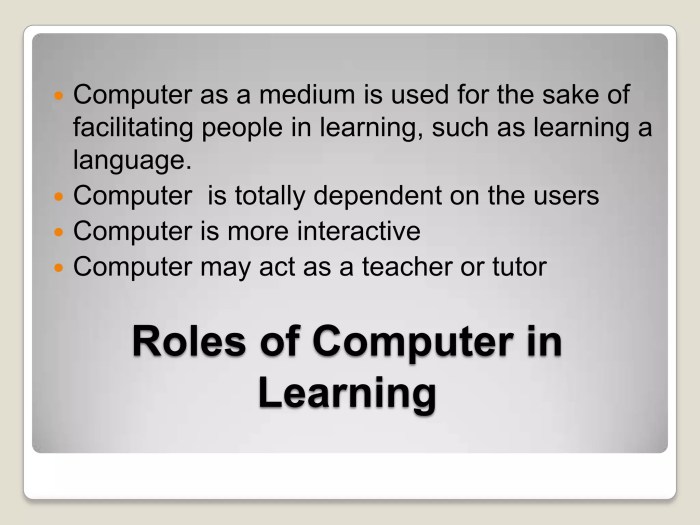
CALT, or Computer-Assisted Language Teaching, isn’t just a fancy term; it’s a game-changer for language learners. It leverages technology to make learning more engaging and effective, adapting to individual needs and styles. From boosting grammar skills to fostering intercultural understanding, CALT offers a diverse range of applications. It’s like having a supercharged language tutor, personalized for each student.CALT tools are designed to go beyond the traditional classroom.
They offer interactive exercises, tailored feedback, and a personalized learning experience, making language learning more accessible and effective. It’s no longer just about textbooks and rote memorization; it’s about interactive exploration and real-world application.
Grammar Practice
Effective grammar practice using CALT goes beyond simply showing rules. It integrates interactive exercises that actively involve learners. These tools often present grammar points in a variety of contexts, enabling learners to understand and apply them in practical scenarios. Gamified exercises, for example, make grammar practice more engaging and motivating, fostering a deeper understanding of the rules.
Visual aids and interactive simulations are also valuable for solidifying abstract grammar concepts.
Vocabulary Building
CALT offers numerous tools to make vocabulary acquisition more engaging and efficient. Flashcard apps, for example, allow learners to memorize new words through repetition and spaced repetition. Interactive games and quizzes can make vocabulary learning fun and memorable. Contextual learning, where new words are presented in relevant sentences or paragraphs, helps learners understand the words’ meaning and usage within a natural setting.
These tools provide a personalized approach to vocabulary development.
Pronunciation Practice
CALT tools can provide effective pronunciation practice. Audio recording and playback features enable learners to hear and analyze their pronunciation, pinpointing areas needing improvement. Interactive exercises with audio prompts and feedback help refine pronunciation skills, leading to greater confidence in speaking. These tools allow learners to practice at their own pace and receive targeted feedback, making the process more personalized and effective.
Reading Comprehension
CALT tools are transforming reading comprehension. Interactive e-books, for example, provide learners with opportunities to actively engage with the text. Tools can also highlight vocabulary in context, explain grammatical structures, and even provide summaries or comprehension questions. This personalized approach makes reading comprehension more engaging and effective.
Developing Intercultural Competence
CALT plays a crucial role in developing intercultural competence by providing opportunities to interact with people from different cultural backgrounds. Virtual exchange programs, language learning apps with diverse user communities, and simulations of intercultural communication scenarios can expose learners to diverse perspectives and experiences. This interaction fosters understanding and empathy, empowering learners to engage in respectful communication across cultures.
Language Assessment and Feedback
CALT tools provide opportunities for more comprehensive language assessments. Automated grading of exercises and quizzes saves instructors time and allows for immediate feedback to learners. Adaptive learning platforms can tailor exercises to a student’s specific needs, allowing for more targeted practice. Automated feedback systems offer personalized feedback, highlighting areas for improvement.
Successful CALT Implementations
Several schools in Jogja have successfully integrated CALT into their language programs. One example is the use of interactive grammar apps in junior high schools, which has shown improvements in grammar comprehension and application. Another success story involves the use of virtual exchange programs for high school students, fostering intercultural understanding and communication skills.
CALT Tools Categorization
| Tool Category | Description | Example Tools |
|---|---|---|
| Grammar Practice | Interactive exercises, grammar games, and simulations for practicing grammar rules. | Grammarly, Quizlet, Khan Academy |
| Vocabulary Building | Flashcard apps, vocabulary building games, and context-based learning tools. | Anki, Memrise, Vocabulary.com |
| Interactive Exercises | Activities that allow learners to practice language skills in an interactive and engaging way. | Duolingo, Rosetta Stone, Babbel |
Future Trends in CALT
Hey, geng! CALT is seriously evolving, and it’s gonna be wild. The tech is changing faster than your favourite TikTok trends, so we gotta keep up. Imagine personalized learning experiences that are totally tailored to you, or using AI to make learning a language way smoother. Let’s dive into what’s coming next!
Emerging Technologies Shaping the Future of CALT
Newfangled tech is totally transforming how we learn languages. From virtual reality classrooms to augmented reality exercises, the possibilities are endless. These tools can make learning more immersive and interactive, creating a more engaging experience than just staring at a textbook.
Potential of AI and Machine Learning in Personalized Language Learning
AI is about to change the game in language learning. Imagine a system that adapts to your learning style and pace, identifying your weaknesses and strengths in real-time. This personalized approach will help you master the language at your own speed. It’s like having a super-smart tutor that understands you better than anyone else!
Growing Importance of Mobile-Based Language Learning Applications
Mobile apps are practically everywhere now, and language learning is no exception. These apps offer convenient and accessible learning resources, whether you’re on the go or chilling at home. You can practice your pronunciation, vocabulary, and grammar anytime, anywhere. It’s like having your entire language learning toolkit in your pocket.
Incorporating Authentic Materials in CALT
Using real-world materials is crucial for a truly effective language learning experience. Think about using news articles, podcasts, movies, or even social media posts in your lessons. This makes learning more relevant and engaging, and you’ll be able to use the language in a more natural and authentic way. It’s like stepping into the real world of the language you’re learning.
Emerging Trends in CALT
Here’s a quick rundown of some of the exciting trends in CALT:
- AI-powered adaptive learning platforms: These platforms adjust to your learning style and pace, making learning super efficient.
- Virtual and augmented reality (VR/AR) simulations: Imagine practicing conversations in a realistic virtual environment or exploring a foreign city through an AR app. It’s like you’re actually there!
- Gamification techniques: Making language learning fun and engaging by using game-like elements and rewards. This makes learning more enjoyable and motivating.
- Emphasis on communicative competence: Focusing on real-life communication skills rather than just grammar rules. It’s about being able to speak and understand the language naturally.
- Personalized learning pathways: Tailoring the learning experience to each student’s unique needs and goals. This makes learning more effective and enjoyable.
- Integration of diverse learning resources: Using a variety of resources like videos, music, and cultural information to create a well-rounded learning experience. This helps in understanding the cultural nuances of the language.
Final Conclusion

In conclusion, computer assisted language teaching (CALT) has proven to be a powerful tool in modern language education. While challenges remain, the potential benefits are substantial, ranging from improved learner motivation and interaction skills to the personalized learning experiences it facilitates. The future of CALT looks promising, with emerging technologies like AI and mobile applications poised to further enhance its effectiveness and accessibility.
Ultimately, the successful integration of CALT into language learning depends on a careful balance between technological advancement and pedagogical understanding.
Query Resolution
What are the most common learning styles that CALT caters to?
CALT can accommodate various learning styles, including visual, auditory, kinesthetic, and even multimodal learners. Interactive exercises, multimedia resources, and personalized feedback mechanisms contribute to catering to these varied preferences.
How does CALT improve learner motivation?
CALT often fosters motivation through gamification, interactive activities, and personalized learning paths. The engaging nature of digital resources can boost learner interest and engagement, leading to increased motivation and persistence.
What are the potential challenges of implementing CALT in diverse educational contexts?
Implementing CALT effectively in diverse settings requires careful consideration of access to technology, teacher training, and the need for a supportive learning environment. Digital literacy and technical support are also key considerations.
What role does AI play in the future of CALT?
Artificial intelligence (AI) is poised to personalize language learning further. AI-powered adaptive learning platforms can tailor content and exercises to individual learner needs, leading to more effective and efficient language acquisition.
